















































RentAVillaInAruba.com · Practical guides
How to compare villa areas in Aruba beyond the beach name
Published 5 November 2026

An area name is a starting point, not a description of the journey from a particular villa. Compare the address, everyday plans and transport arrangements together.
Start with the days you actually want
Write down a few ordinary days before comparing accommodation. Where would you like to eat, buy groceries or meet a tour? Will some people stay at the villa while others go out? A useful location brief describes these routines rather than simply asking for the best area. Keep essential requirements separate from preferences so an attractive photograph does not make the decision for you.
Aruba’s official regions guide introduces places including Palm Beach, Oranjestad and San Nicolas. Use that overview to understand the island, then investigate the exact property address. A broad locality label can cover very different streets. This guide does not rank neighbourhoods, certify safety or claim that every villa in an area shares the same character.
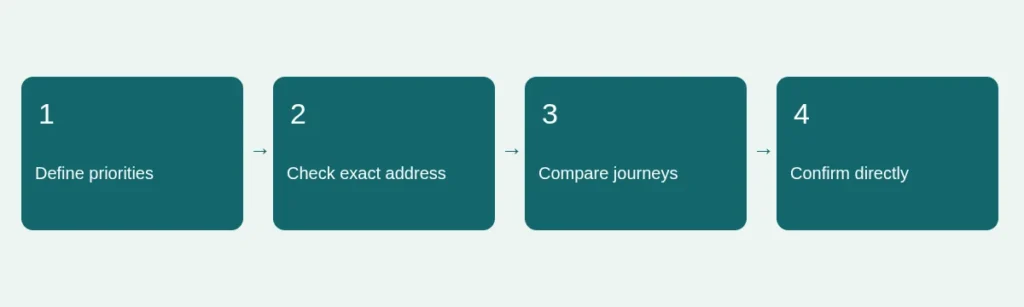
Check the actual address and route
Ask the provider for the address or a sufficiently precise location before committing. Compare the route to the destinations that matter to your group. Do not turn a straight-line map distance into a walking-time promise. Junctions, paths, access arrangements and your own mobility needs can make a short-looking journey unsuitable.
If the description says near the beach, ask which beach access point it means and how the journey is normally made. Clarify whether parking is available at the villa and at your intended destination. A sea view, beach access and beachfront location are separate claims; record only what the provider can substantiate for that particular property.
Compare transport as part of the stay
The official tourism transport guide describes rental vehicles, taxis, public transportation and shuttle options. That overview does not establish a specific service to a villa. Ask the relevant operator about your actual pickup, destination, passenger count and luggage. Avoid assuming that a transfer advertised for a resort also serves an independent property.
For a group, discuss how people will move independently. One vehicle may not solve the needs of guests following different plans. Keep a simple note of who needs transport, when it is needed and which arrangements remain unconfirmed. This is more useful than declaring an entire area convenient without considering how your group will use it.
Ask about the immediate setting
Ask factual questions about the property surroundings: access road, entrance, parking, nearby construction known to the provider and any shared facilities. A dated answer is stronger than an undated adjective such as peaceful. Do not infer noise levels or privacy from a gallery that omits neighbouring buildings.
When an answer matters, request a current photograph or explanation and keep the date. A location source should identify the property itself, not just a nearby landmark. Do not publish precise private access instructions in a public review or directory field; those belong in the provider’s appropriate private check-in process.
Keep the decision transparent
Make one row per property with address evidence, journeys, transport questions and unresolved details. Compare the same assumptions across candidates. If an area sounds appealing but a key journey is uncertain, leave it uncertain until you have a direct answer. RentAVillaInAruba.com organises supplied villa information; it does not guarantee walking access, transport availability or a particular experience.
Sources and next steps
Aruba Tourism Authority: regions; official transport overview.
Reviewed 5 November 2026. These are comparison questions, not property inspections or reservation advice. Confirm current facts directly with the responsible provider. Browse the villa directory or use our planning guide. Images are conceptual illustrations, not evidence of real accommodation.